





 History
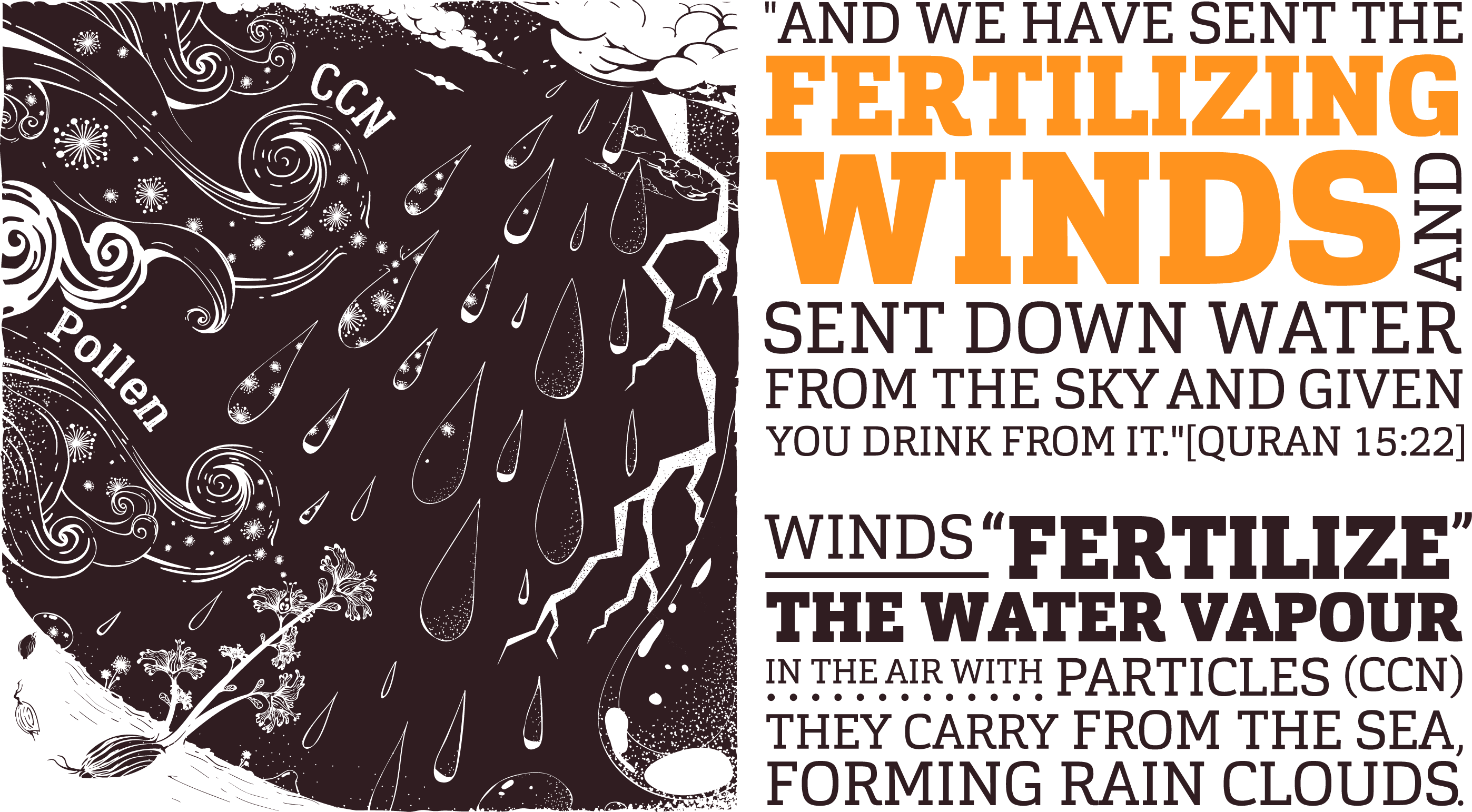
The natural phenomena of wind, rain, and clouds have fascinated people for centuries. Throughout history, humans have tried to understand the workings of nature and the forces behind it. In recent times, scientific advancements have shed light on the mechanisms that drive these phenomena. However, long before science had unraveled these mysteries, the Quran, the holy book of Islam, had already revealed some profound insights about the relationship between wind and rain. In one verse of the Quran, the “fecundating” characteristic of the winds, and the resulting formation of rain are mentioned. The verse mentions fecundating winds:
And We send the fecundating winds, then cause water to descend from the sky, therewith providing you with water in abundance.
SURAH 15 AL-HIJR, VERS 22
This verse emphasizes the role of wind in the formation of rain, which until the beginning of the 20th century was thought to be merely responsible for driving the clouds. However, modern meteorological findings have demonstrated the “fecundating” role of the wind in the formation of rain.
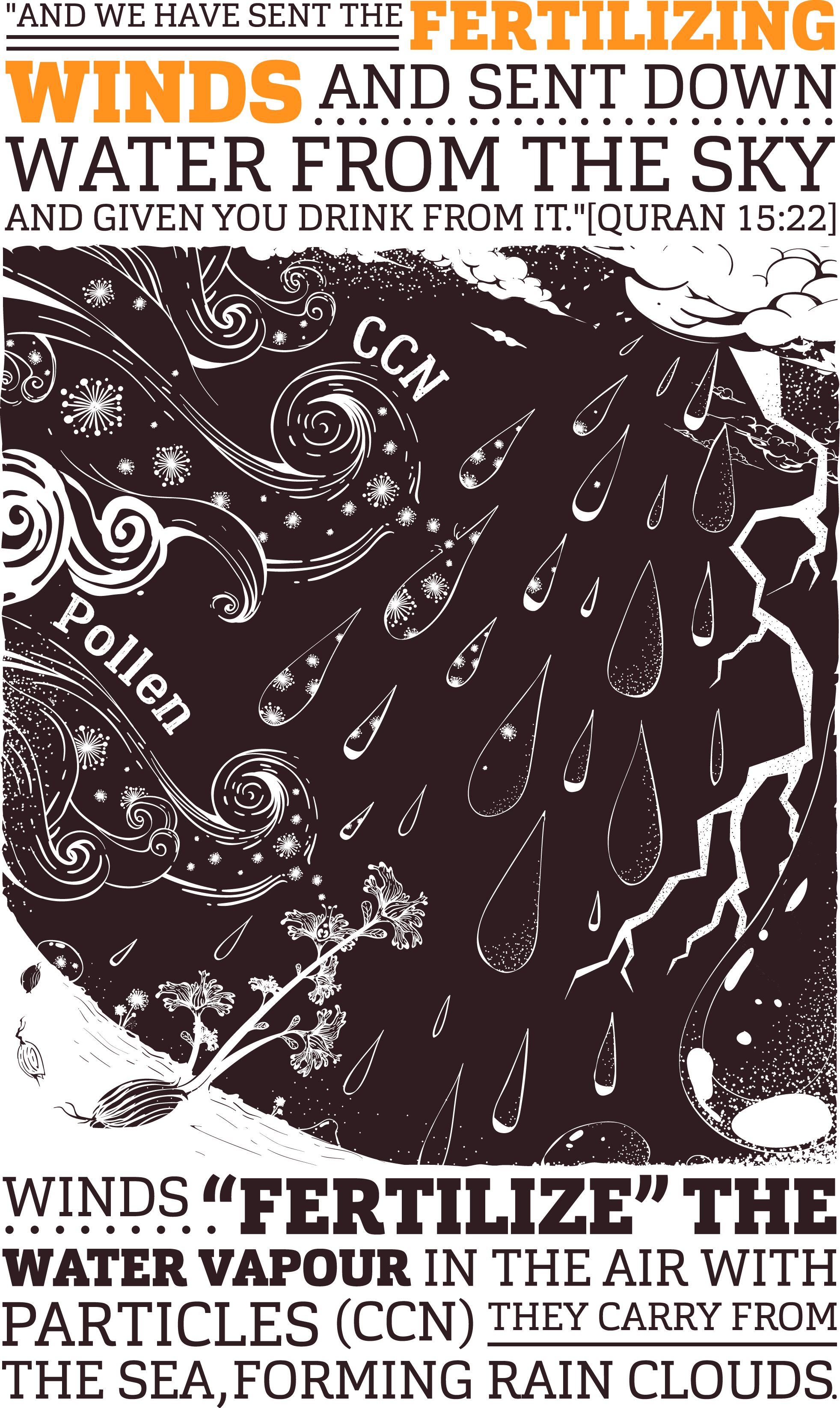
The process of fecundation works in the following way: on the surface of oceans and seas, air bubbles form due to the water’s foaming action. When these bubbles burst, tiny particles with a diameter of just one-hundredth of a millimeter are thrown up into the air. These particles, known as “aerosols,” mix with dust carried from the land by the wind and are carried to the upper layers of the atmosphere. There, these particles come into contact with water vapor, and the vapor condenses around them to form water droplets. These droplets first come together to form clouds and then fall to the earth in the form of rain.
The role of wind in this process is crucial, as it “fecundates” the water vapor floating in the air with the particles it carries from the sea. Without this fecundating function, water droplets in the upper atmosphere would never form, and there would be no rain.
It is fascinating to note that the Qur’an revealed this critical role of wind in the formation of rain centuries ago, at a time when very little was known about natural phenomena. The Qur’an’s emphasis on the role of wind in the formation of rain is a testament to its miraculous nature and its deep understanding of the natural world.


