Muslim Tolerance: A Rich History Often Overlooked
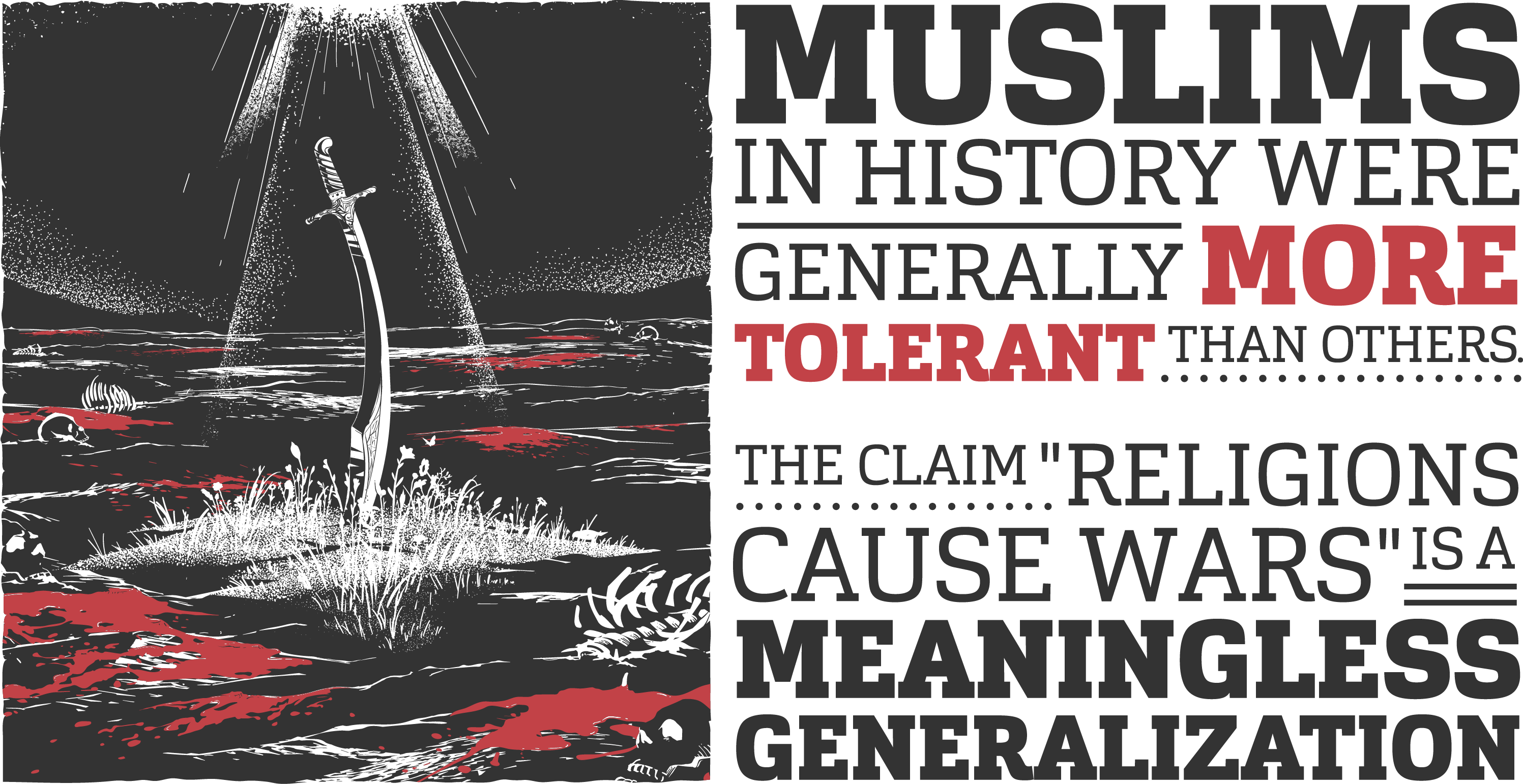
Throughout history, Muslims have been recognized for their exceptional tolerance towards people of different faiths, their own citizens, and even their enemies, particularly during times of conflict. While there were instances where some Muslim rulers were not tolerant, the overall trend was one of remarkable tolerance, especially considering the historical context. It is also worth noting that while there were compassionate non-Muslims, such as amongst the Christians, the level of tolerance consistently demonstrated by Muslim rulers was unique and widespread.
If we consider Muslim rulers who were deemed bad and compare them to their counterparts, the difference in their level of cruelty and tolerance would be significant. The common statement that “everyone has blood on their hands” is an inaccurate portrayal of history, as it undermines the consistent cruelty and racism of many. For example, comparing an Ottoman ruler with the worst reputation to his opponent, Vlad III (who inspired the character Count Dracula and was nicknamed Vlad the Impaler for his mass impalement of thousands of Muslim civilians and prisoners), highlights the importance of evaluating historical figures in their entirety and in context, rather than simply focusing on a single action or event.
The display of tolerance by Muslims, especially those closer to the advent of Islam, is noteworthy. Unfortunately, these instances are often undervalued and do not receive the attention they deserve in schools and the media.
Saladin’s conquest of Jerusalem in 1187 exemplifies this. He allowed the Christian inhabitants to leave the city unharmed and permitted Jews to return, from which they had been expelled by the Crusaders. Saladin’s act of mercy earned him great respect even from his opponents, in contrast to the Christian leaders who had previously conquered Jerusalem. These leaders brutally slaughtered both the Muslim and Jewish inhabitants, leaving the city’s streets red with blood.
When the Muslims conquered Spain in the 8th century, they not only allowed Jews and Christians to continue practicing their faiths, but they also promoted a culture of learning and advancement in fields such as science, mathematics, and philosophy. They also had advanced medical practices and established hospitals that were open to all patients, regardless of their background. Muslim Spain was a center of knowledge and innovation and became the basis for much of the scientific and philosophical thinking in Europe during the Renaissance.
In contrast, during the Reconquista, Christians took back Spain and forcibly converted and killed many non-Christians. When Muslims were driven out, the Jews asked them if they could come with them, knowing that their safety was guaranteed. And so, many Jews found a new home in Morocco.
Islam in a Post-Colonial World: Confronting Ongoing Conflicts and Discrimination
It is worth noting that in more recent times, during the Holocaust in World War II, Morocco again opened its arms to the Jews who fled Nazi persecution. The country provided a safe haven for many Jews and continues to maintain a vibrant Jewish community.
In current times, we have seen the impact of European colonization on Muslim countries. The arbitrary borders drawn by colonizers have caused conflicts and tensions that still exist today. Additionally, some Muslim countries have been placed under the control of secular Arabic dictators, who have oppressed their own citizens.
One of the most pressing issues today is the ongoing conflict between Israel and Palestine. After World War II, England and the Zionist movement played a key role in the establishment of Israel in 1948, which resulted in the displacement of millions of Palestinians. The Palestinian people have suffered from occupation, blockades, and attacks by the Israeli government, with the support of their Western allies. This has led to a continuous cycle of violence and human rights violations.
Sadly, the oppression of Muslims is not limited to the Middle East. Muslim communities around the world have been demonized, with many stereotypes and misconceptions perpetuated by Western media outlets. And they have been oppressed by discriminatory laws and policies. In many Western countries, laws such as the Niqab and Hijab ban are implemented.
In addition, the USA’s war in Iraq and the bombardments in Syria once again have proven them to be the main aggressor throughout their history. These actions have resulted in the deaths of countless innocent people and further destabilized the region, fueling terrorist attacks. It is important to acknowledge the harm caused by Western powers today and to work towards creating a more just and peaceful world.
Despite these challenges, Muslim citizens continue to uphold the principles of tolerance and compassion towards others, which are at the core of Islamic teachings.
Islamic Teachings on Tolerance: Lessons from the Quran and Hadith
Islamic scripture shows how Muslims should treat others, whether they are of the same faith or not. There is a quote from the Prophet Muhammad that exemplifies the idea of treating others as you would like to be treated.
None of you has faith until he loves for his brother what he loves for himself SAHIH AL-BUKHARI
Tolerance towards people of other faiths
The Quran teaches that there is no compulsion in religion and that people of other faiths should be treated with kindness and respect. For example, the Quran states:
God does not forbid you from those who do not fight you because of religion and do not expel you from your homes – from being righteous toward them and acting justly toward them. Indeed, God loves those who act justly. SURAH 60 Al-MUMTAHANAH, VERSE 8
Tolerance towards Women
Contrary to popular stereotypes, Islam also teaches good treatment of women. The Quran specifically states that men and women are equal in the eyes of God and that they should be treated with respect and kindness. For example, the Quran says:
And do not wish for that by which Allah has made some of you exceed others. For men is a share of what they have earned, and for women is a share of what they have earned. SURAH 4 AN-NISA, VERSE 8
Tolerance towards other ethnicities and nationalities
Islam teaches that all people, regardless of their ethnicity or nationality, are equal in the eyes of God. The Prophet Muhammad, in his last sermon, said:
O people, your Lord is one and your father Adam is one. There is no superiority of an Arab over a non-Arab, or of a non-Arab over an Arab, or of a white over a black, or a black over a white, except by taqwa (piety and righteousness). MUSNAD AHMAD
This means that everyone should be treated with respect and kindness, regardless of their background. In fact, the Quran even encourages Muslims to learn from other cultures and to befriend people from different backgrounds:
O mankind, indeed We have created you from male and female and made you peoples and tribes that you may know one another. Indeed, the noblest of you in the sight of Allah is the most righteous of you. Indeed, Allah is Knowing and Acquainted. SURAH 49 AL-HUJURAT, VERSE 13
Tolerance towards Animals
Islam introduced many human rights that were ahead of their time, such as the right to life, property, and freedom of religion. Islamic scripture encourages kindness to all, including animals. The Prophet Muhammad said:
Whoever is kind to the creatures of God is kind to himself. SAHIH AL-BUKHARI
Beyond the Stereotype: The Complex Causes of Wars
The idea that religions cause wars is a sweeping generalization that overlooks the complexity of human conflicts. History shows us that anything can cause wars, including secularism and atheism. For instance, Western secular governments have been involved in numerous wars throughout history, including the World Wars, the Cold War, and the Iraq War, which have caused immense suffering and destruction. Similarly, atheism has been used to justify violence and oppression, as seen in the Reign of Terror during the French Revolution and the persecution of religious minorities in Communist countries, such as the former Soviet Union and China, which forces atheism on the population and has built concentration camps for Muslim Uyghurs.
Furthermore, it’s important to note that the Muslim conquests occurred during a time when “conquer or be conquered” was the norm, and the conquests were not motivated by religious intolerance but by a desire for power and territory. Additionally, Islam prohibits forced conversions, and there is no evidence that people were forced to convert to Islam during the conquests. In fact, many non-Muslims living under Muslim rule were granted protection and allowed to practice their religions freely.
In conclusion, attributing wars to religions alone is a flawed and reductionist view that ignores the many other factors that contribute to conflicts. Instead of scapegoating religions, we should strive to understand the complex nature of human conflicts and work towards promoting tolerance, empathy, and peaceful coexistence.
Conclusion
While there have been unfortunate exceptions to Muslim tolerance throughout history, they do not negate the overall trend of Muslim societies’ tolerance towards other ethnicities, religions, and genders. Islamic scripture, teachings, and practices have consistently emphasized the importance of treating others with kindness and respect, regardless of their background or beliefs. It’s important to recognize that opponents of Islam often cherry-pick the exceptions and ignore the acts of counterparts of Muslims during those times to paint an inaccurate image of Muslims in history. Instead, we should examine the whole picture and recognize the remarkable contributions of Muslim societies toward promoting tolerance, justice, and human rights. Education and Positive portrayals of Muslims in the media will help combat stereotypes and promote tolerance.






 History