





 History
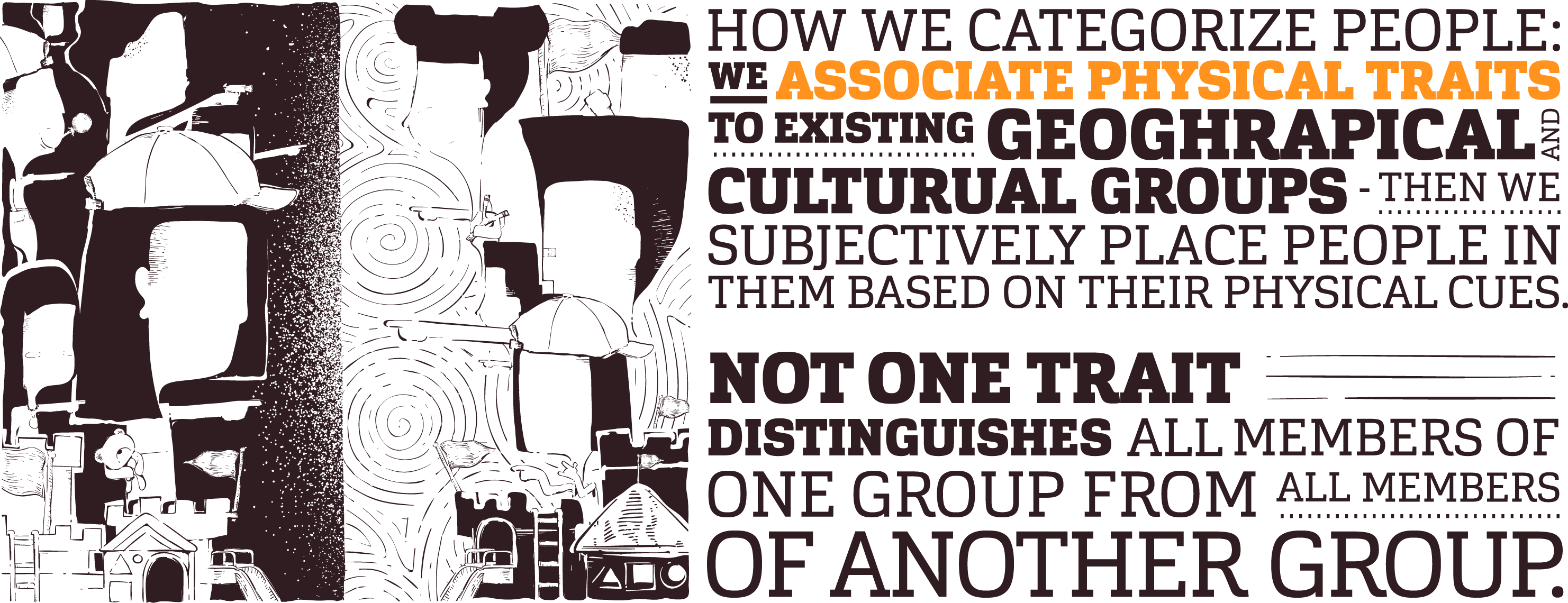
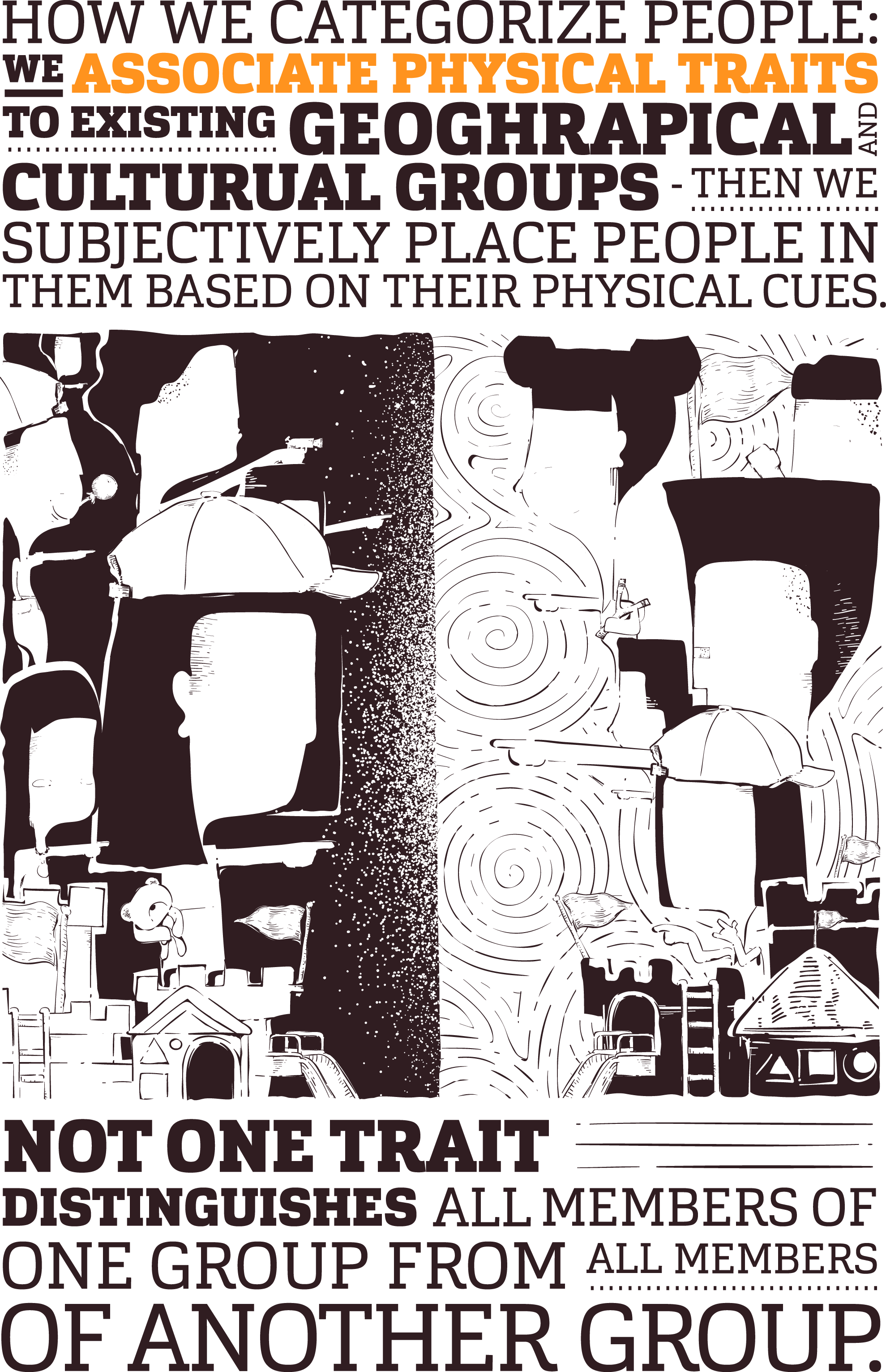

Take a green ball with a white dot, and place it in a basket filled with green balls - the majority having no dot. The few balls that have a dot will be overlooked, and your focus will mainly be on the color green. If someone asked you what was in the basket, you would say it was full of green tennis balls.
Now, take one of the green balls without a dot from the basket and place it in a different basket, which is filled with green balls that mostly all have a dot. Your focus will move to the dots, because of how its repetition compares to the balls without a dot. The balls without a dot will look like they don’t belong in this basket, because they’re in the minority, even though they’re still green, like the others. In fact, the color green has now become insignificant. You’d probably define this basket as the “basket with the dotted balls.”
Finally, there’s a third basket with balls that each have a different color, but all have a dot. You will focus on the dots, because the recurring dots are the only trait that is consistent – this is their shared quality. If you throw in a ball without a dot, it will stand out. The color of the ball will be irrelevant, even if it's a color that appears more often than the other colors in the basket.
This is how humans categorize things, whether we’re doing it consciously or not. Races don’t naturally, biologically, exist. Groups of similar people do tend to stick together, such as people from the same country or the same religion, in some cases, but none of these groups have any single trait that each and every member of their group possesses.
There is actually more genetic variation within a group of humans than between two separate groups. Our process of categorization, therefore, prods us to select certain physical cues based on their relatively higher frequency across a group, and then link them to that group. Similarly, a ball from one basket can have more differences with a ball from its same basket than with a ball from another basket, but if it still happens to share one certain trait with a lot of the other balls in its own basket, it will be seen as a part of that group. In the human mind, a single trait can override all other traits for the sake of convenience, or easy memory, e.g skin fold of the upper eyelid.
In the case that a person’s distinct traits can’t be associated with an existing group, then their traits will just be seen as their own personal traits. For instance- if the Epicanthal eye fold frequency was more evenly spread, or if it was unique to that person it would be overlooked. This is because traits on their own don’t define or create groups, it’s their association with an existing group that gives them the definition of “belonging to that group.”
People tend to group others depending on their personal experiences and assumptions. Imagine someone not knowing the shared characteristic (the dot) of the third basket with the different colored balls. He would select the green tennis balls and place them in the ‘basket with the green balls’, a basket he’s familiar with. He wouldn’t place them in the ‘basket with the green dotted balls’, because the balls in that basket are defined by the dots and not the color green, despite the fact that they all share that color. Unknowingly, he will have placed people into different “racial groups” than another person might have.
It’s natural that we would tend to associate certain traits with certain existing geographical and cultural groups. Our brains instinctively categorize as a way to make sense out of a complex world. Our higher-functioning brains- don’t have to, and in fact shouldn’t, rely on such simplistic and ignorant means of categorizing other human beings.


